Phases in detail¶
Every phase below lists what it does, the command, and — where it
produces something — the real output as a figure. Commands assume you're
inside a topic subdirectory with the toolkit at ../tools/. The full procedure
lives in
PLAYBOOK.md.
Lab mode
Lab mode replaces Phases 1–2 with its own corpus-ingest front end (L1–L3) and then runs Phases 3–8 verbatim. See Topic mode vs lab mode.
Phase 1 — Scope the topic¶
Human decision. You and the agent agree on the question and its span — field,
species/method restrictions, how far back to go. The agreement is written to
topic_definition.md so later phases (and the antecedents search) stay anchored.
Phase 2 — Search¶
The agent (or you) runs a literature-search pass using
tools/search_prompt_template.md,
returning papers as rows.json. Links must be DOI URLs. This is the
recency-biased forward search — it finds the current literature but misses the
roots, which is what Phase 2b is for.
Phase 2b — Antecedents (required)¶
The roots the forward search misses
Every review — topic and lab mode — must include an antecedents pass. The forward search is anchored on the topic's current framing; the antecedents pass deliberately reaches back along three axes:
- Measurement / methodology origins — where the tools came from.
- Foundational empirical results — older neurophysiology, psychophysics, etc.
- Theory / computational framework — the ideas the field is built on.
Reuse the search template with the tier flipped to favor classic/foundational work, then fold the results into the existing themes (no new lanes unless you ask for them). Pre-2000 classics, books, and chapters often have no DOI — they're kept as hand-written canonical APA and excluded from citation counting.
Phase 3 — Verify EVERY citation (critical)¶
This is the step that earns the toolkit's trust
Search agents fabricate roughly 1 in 4 citations. verify.py checks every
one against PubMed/PMC/CrossRef and the arXiv API (so preprints and
conference papers get a real verdict, not a misleading NOT-FOUND). It catches:
- wrong / fabricated first authors,
- invented or mis-copied DOIs (including DOIs that resolve to a real but unrelated paper),
- inverted or misattributed findings,
- entirely fabricated author lists for papers that genuinely exist.
The report marks each citation OK / MISMATCH / NOT-FOUND / ERROR so you
(or the agent) can fix or drop it before anything downstream depends on it.
NOT-FOUND and ERROR are not interchangeable: NOT-FOUND means every
lookup completed and nothing matched (chase it — likely fabricated), while
ERROR means a lookup could not complete (rate-limit / network) and must be
re-run. To keep arXiv's aggressive rate-limiting from turning real preprints
into false NOT-FOUNDs, arXiv ids are prefetched in batches (id_list, many per
call). expect_year may be a string or an int. A throttled DOI lookup is not
rescued by the title-search fallback either: if the authoritative lookup errored and the
fallback record does not match the claim, the verdict is ERROR, never MISMATCH.
Phase 3f — Canonicalize EVERY reference (hard gate)¶
python3 ../tools/references.py --rows rows.json --out rows.json
python3 ../tools/references.py --rows rows.json --audit   # exits non-zero on any defect
# then, in a reviewed pass, sentence-case the titles:
python3 ../tools/sentence_case.py --rows rows.json --proper proper_nouns.json --vocab
python3 ../tools/sentence_case.py --rows rows.json --proper proper_nouns.json --apply
Non-English titles are skipped by default
The pass lowercases German nouns, so a German or French title would come out
wrecked. sentence_case.py detects them and leaves them exactly as published,
printing which refs it skipped; pass --include-foreign to override. Note that
von and de are not usable language markers — they appear inside personal
names in English titles ("Karl von Frisch", "fin-de-siècle") — and neither is
man ("including man"). A run of three or more ALL-CAPS words is lowercased as
a shouted title, while isolated acronyms (fMRI, MEG) stay protected, and
model-organism genera come from the shared common.GENERA list.
Rebuilds every reference from its verified DOI/arXiv id into canonical APA-7: full author lists, nobiliary particles, sentence-case titles, real venue names (including bioRxiv/PsyArXiv), HTML-unescaping. The journal DOI is preferred over an arXiv preprint as the version of record. No agent-typed or database-typed reference string is trusted — it's all regenerated from the resolved record.
The audit is a build gate
--audit exits non-zero on any imperfect reference (empty venue, missing
year, etc.). A broken reference fails the pipeline, not your reader. Only a
genuinely DOI-less book/report may keep a hand-written APA string.
After this phase, rows.json is the live table — edit it directly for later
changes; re-running an upstream emitter is destructive.
Phase 4 — Download PDFs (opt-in)¶
Off by default — the PDF (local) column stays empty unless you ask. When
enabled, tools/download.py
fetches from arXiv → Unpaywall → EuropePMC, and
tools/reconcile_downloads.py
files manually-downloaded PDFs into the topic directory.
Phase 5 — Build the spreadsheet¶
The core deliverable. Columns:
Topic · Ref# · APA reference · Link · Summary · Tag · Family · Cite (OpenAlex) ·
Cite (S2) · Verify note · PDF (local) · Xref
. Rows are color-coded by origin, and the
Cite / Family / Verify note columns appear automatically once any row carries them.
cited in your source doc (if any) · agent search · antecedents pass · cross-citation pass · the lab's own papers (lab mode)
A live slice of a real bibliography (complexity_representation, 190 rows):
| Ref# | APA reference | Summary | Tag | Family | Cite (OA) |
Cite (S2) |
|---|---|---|---|---|---|---|
| 1a1 | Attneave, F. (1954). Some informational aspects of visual perception. Psychological Review, 61(3), 183-193. | Applied Shannon information theory to vision, arguing natural images are highly redundant and that perceptual information concentrates at points of… | classic | Complexity as information to be measured | 2936 | 2991 |
| 1a4 | Hochberg, J., & McAlister, E. (1953). A quantitative approach, to figural "goodness". Journal of Experimental Psychology, 46(5), 361-364. | Hochberg and McAlister proposed that perceived figural goodness is inversely related to the information needed to specify a figure, an early… | classic | Complexity as redundancy to be compressed | 362 | 389 |
| 1a9 | Trick, L. M., & Pylyshyn, Z. W. (1994). Why are small and large numbers enumerated differently? A limited-capacity preattentive stage in vision. Psychological… | Classic account of subitizing versus counting, showing a near-flat enumeration RT function for 1-4 items and a steep one beyond, attributed to a… | classic | Complexity as bounded capacity | 955 | 988 |
| 1b1 | Hubel, D. H., & Wiesel, T. N. (1962). Receptive fields, binocular interaction and functional architecture in the cat's visual cortex. The Journal of… | Described simple and complex cells in cat striate cortex, with complex cells built from convergent simpler inputs and showing greater positional… | classic | Complexity built by hierarchy | 13831 | 13784 |
| 1b18 | DiCarlo, J. J., & Cox, D. D. (2007). Untangling invariant object recognition. Trends in Cognitive Sciences, 11(8), 333-341. | Proposed that object recognition amounts to untangling object-identity manifolds so they become linearly separable in inferotemporal cortex,… | classic | Complexity as representational geometry | 1045 | |
| 1b19 | DiCarlo, J. J., Zoccolan, D., & Rust, N. C. (2012). How Does the Brain Solve Visual Object Recognition?. Neuron, 73(3), 415-434. | Reviews the ventral stream as a cascade of nonlinear transforms that progressively untangle object manifolds, formalizing recognition as building… | classic | Complexity built by hierarchy | 1920 | 1872 |
The Link column (not shown above) is always the DOI URL
(https://doi.org/<doi>).
Phase 5b — Citation counts¶
python3 ../tools/citations.py --rows rows.json --out citation_counts.json
# then re-run spreadsheet.py to add the Cite columns
Per-paper counts from OpenAlex (primary) reconciled against Semantic
Scholar by DOI. (Google Scholar has no API and blocks bots, so it isn't
usable.) The tool guards against OpenAlex's known batch-undercount — it keeps the
max per DOI and re-queries the canonical single-work endpoint when OpenAlex looks
implausibly low next to S2. No-DOI items stay blank. Set S2_API_KEY to avoid
429s on large corpora.
A published DOI is not automatically the version of record
Before promoting a preprint row to a journal/proceedings DOI, query the
candidate DOI's OpenAlex count. Curran/Proceedings.com DOIs for the printed
NeurIPS volumes (10.52202/*) resolve and show up in a CrossRef title
search, but they are shadow records — swapping to them cut counts ~3-4× on a
real corpus while adding nothing. ACL Anthology (10.18653/*), IEEE/CVF
(10.1109/*) and true journal DOIs are genuine upgrades. If the candidate's
count is much lower than the arXiv record's, keep arXiv.
Phase 6 — Cross-citation pass¶
python3 ../tools/xref.py --rows rows.json --exclude existing_dois.json \
                         --out xref_my_topic.json --min-cites 4 --resolve-unknown
Mines the corpus's own reference lists (via CrossRef) into a frequency table:
which papers does your corpus cite most? Frequently-cited papers you missed are
strong candidates to add. Pick the high-value ones, append them to rows.json,
and send the batch back through Phases 3 + 3f + 5 (re-verify, re-canon).
Ids must stay unique across merges
Reference ids must be globally unique after a merge, and citation counts are
attached only after ids are final — otherwise counts silently
cross-contaminate. Assert len(refs) == len(set(refs)) after merging.
Phase 6b — Families + lineage figure (optional)¶
# agent proposes a grouping; you approve/edit the definitions, then:
python3 ../tools/families.py --rows rows.json --assign families_input.json --out families.json
python3 ../tools/families_figure.py --rows rows.json --families families.json \
        --out-prefix my_topic_families --title "My topic — families"
Human decision #2. The agent proposes a small set of theoretical families;
you approve or edit the definitions before it labels every paper. Then
families_figure.py renders an interactive HTML lineage figure (plus
SVG/PNG/PDF): families as horizontal lanes on a citation-weighted timeline, with
landmark dots auto-selected by citation count, within-corpus citation
in-degree, and lab authorship — no hand-built label map.
Home-lab favoring is off by default
The lab-authorship criterion — starring your own group's papers as
landmarks — is disabled unless you opt in, so the toolkit is neutral for
anyone who clones it. Enable it per project with --lab-author Surname
(repeatable), or once for your shell with export LITREVIEW_LAB_AUTHOR=Surname
(comma-separated for several surnames); the flag overrides the env var.
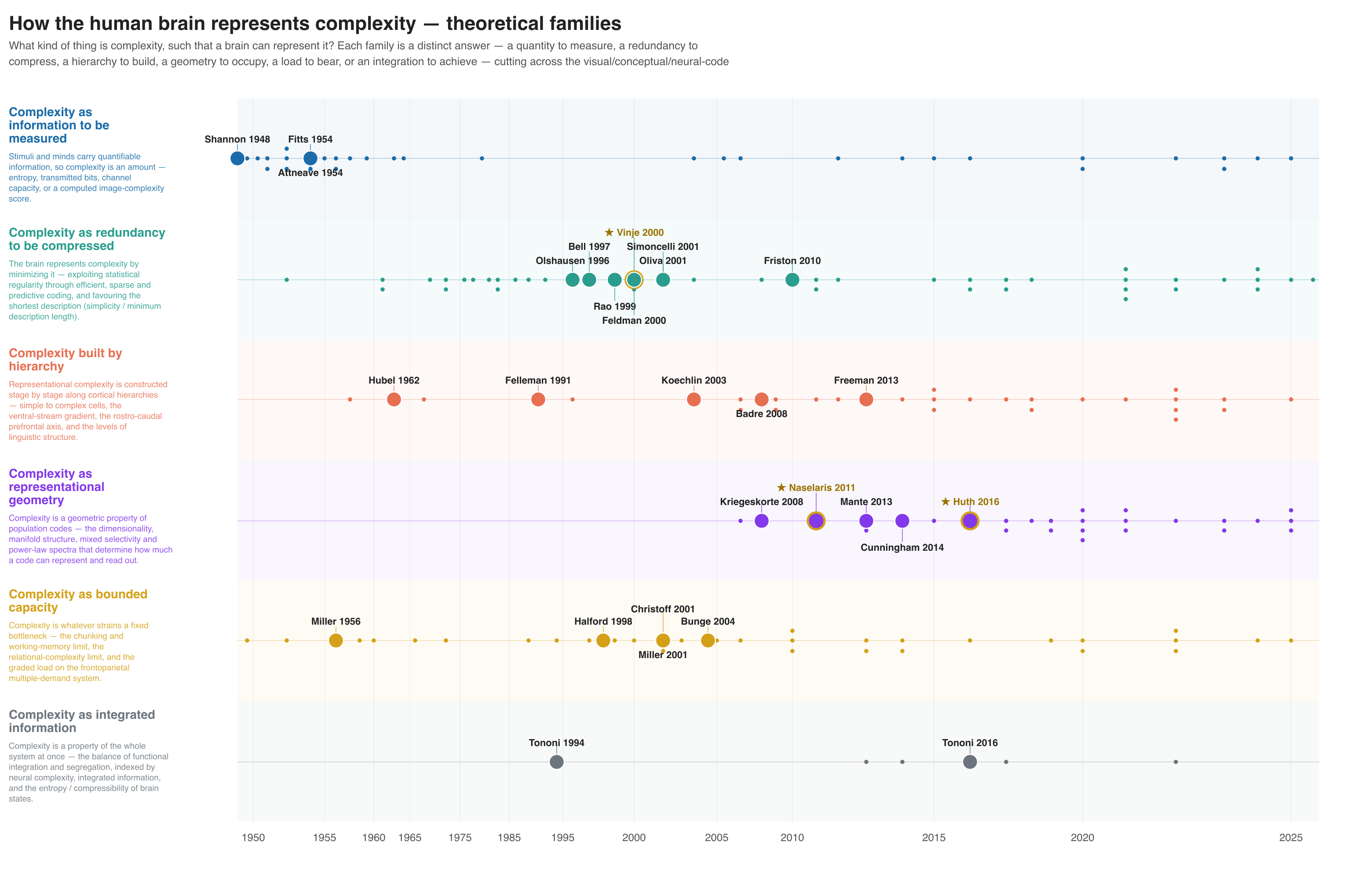
See the Examples gallery for more finished figures.
Phase 7 — Write the review article (optional)¶
# author the prose into content.json (run a PRIORITY AUDIT first), then:
python3 ../tools/cite_check.py --rows rows.json --content content.json   # gate
python3 ../tools/review_paper.py --rows rows.json --content content.json \
        --figure my_topic_families.png --out My_Topic_review.docx
Human-adjacent decision #3. The agent authors the prose — the one step the toolkit does not mechanize. But three things are enforced:
- A mandatory priority audit runs first: an independent pass that checks every origin claim cites the earliest paper that earned priority, not whichever reference happens to fit the sentence. (A recurring LLM failure is crediting a later review for an earlier primary paper's finding.) On one 396-paper review the audit returned five priority inversions and four factual errors, including a mechanistic claim attributed to two papers that had not run the experiment.
cite_check.pygates the render: every in-text citation must name a row inrows.json, and an author-year matching two references is flagged for APA-7 §8.19 disambiguation. The renderer cannot catch either on its own.- The reference list is pulled canonically from
rows.json, so it cannot drift from the verified bibliography.
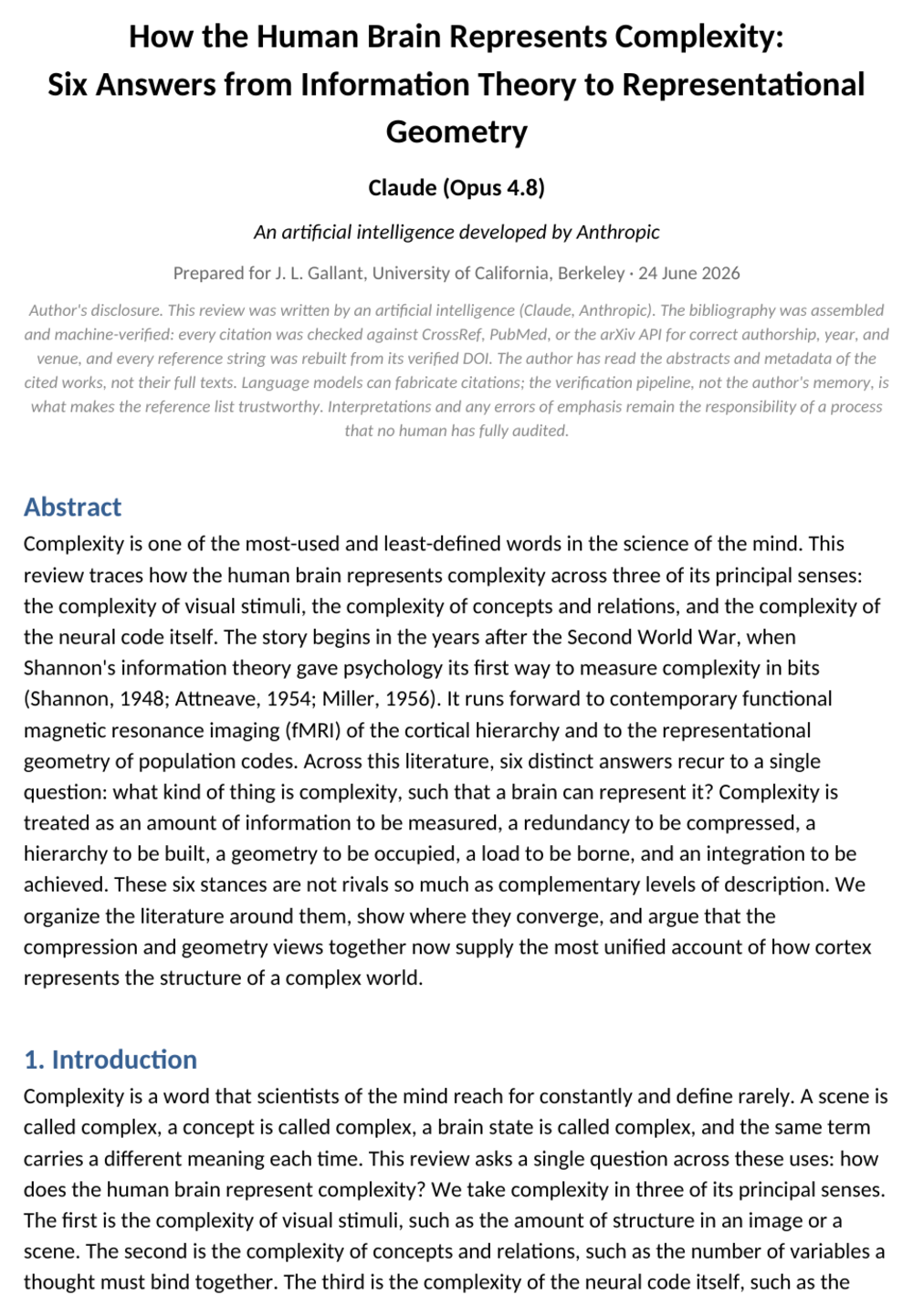
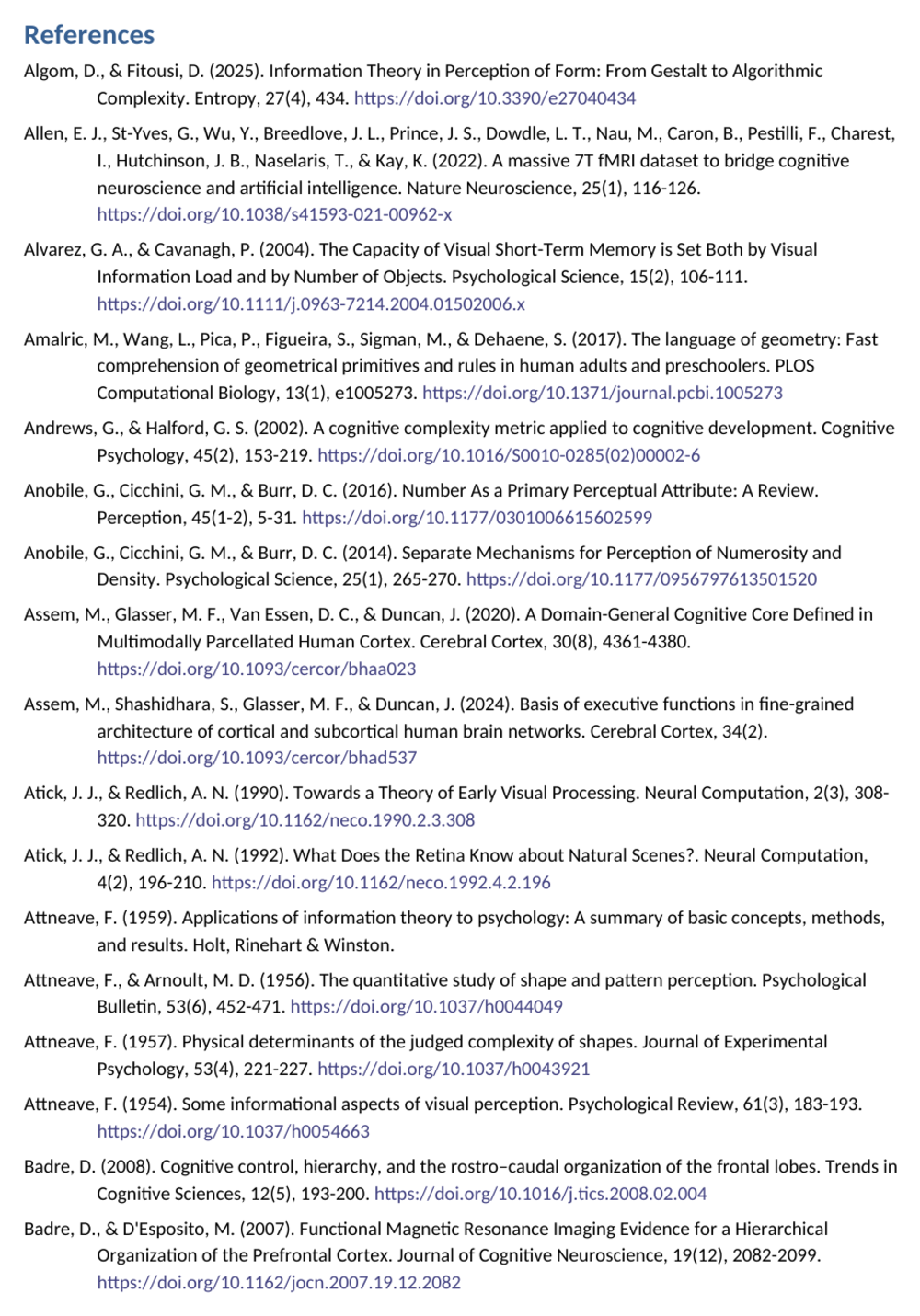
Phase 8 — Hand off¶
The deliverables are the .xlsx (always), plus the lineage figure and review
.docx if you ran those phases. The JSON files in the subdirectory are the audit
trail and the re-run/extend source of truth — keep them with the deliverable.