Literature reviews with no invented references
You describe the review you want in plain English. An AI agent searches the literature, groups the papers into families of ideas, and can write the review up. Scripts check every reference against the publishers' databases.
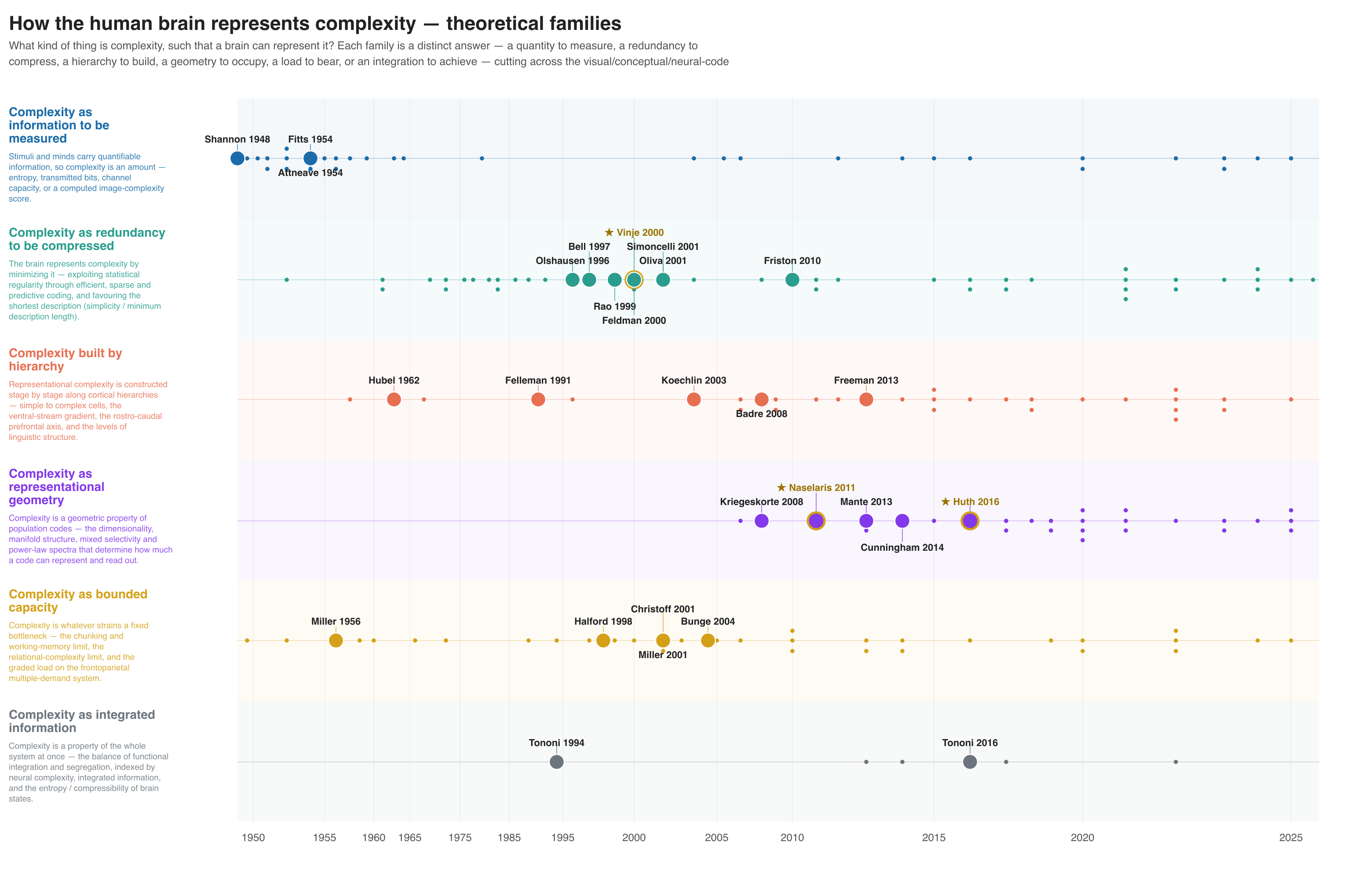
A finished timeline: 190 checked papers in six families of ideas, 1948–2026.
Where to start
I want a literature review
Start with the Tutorial: install, describe your review, and read the results. Then see Example requests and Example results.
I want to change the toolkit
Start with How it works: the procedure the agent follows, every script, and every check. Then see the Tools reference and Maintaining the docs.
What you get
Every review produces a spreadsheet and a timeline, and a written review if you ask for one. The pictures below are examples from one review, on the creatine deficiency disorders of the brain. Yours will show your own topic and papers.
Example
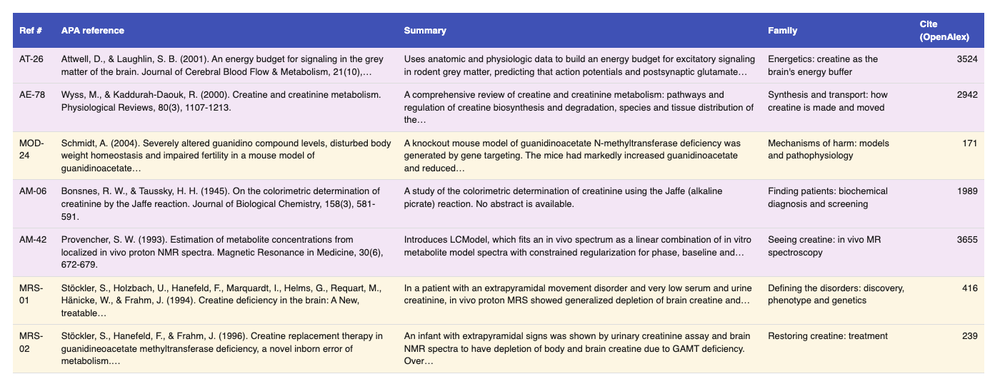
The spreadsheet One row per paper: its full reference, a link to it, a one-sentence summary, its family and its citation counts.
Example
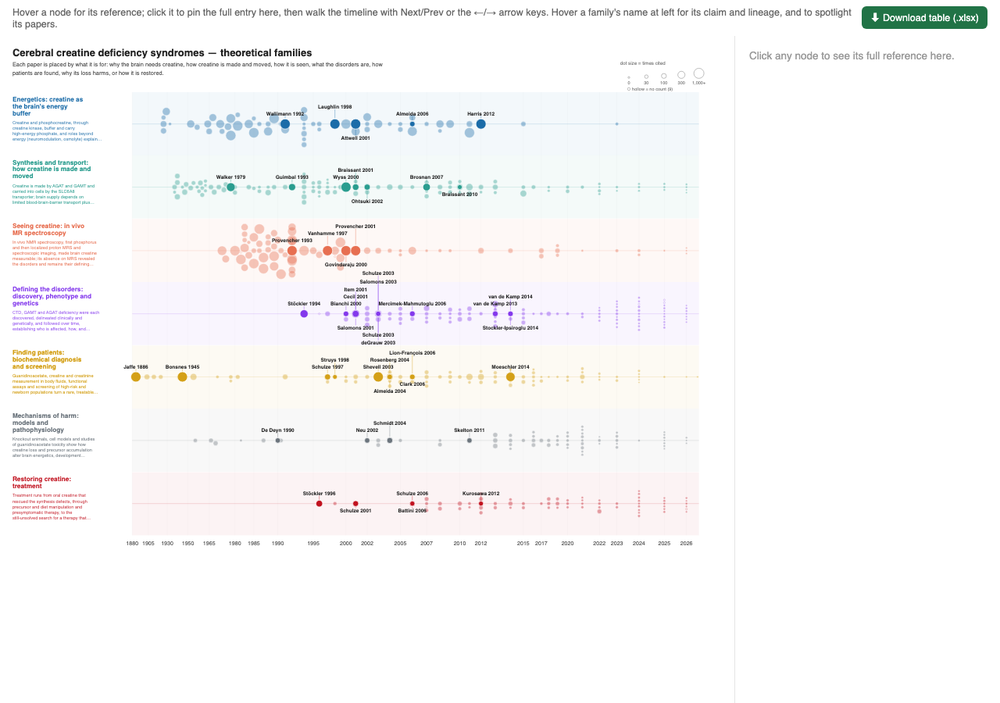
The timeline An interactive page that lays the papers out by family and year. Click any paper to read its summary.
Example
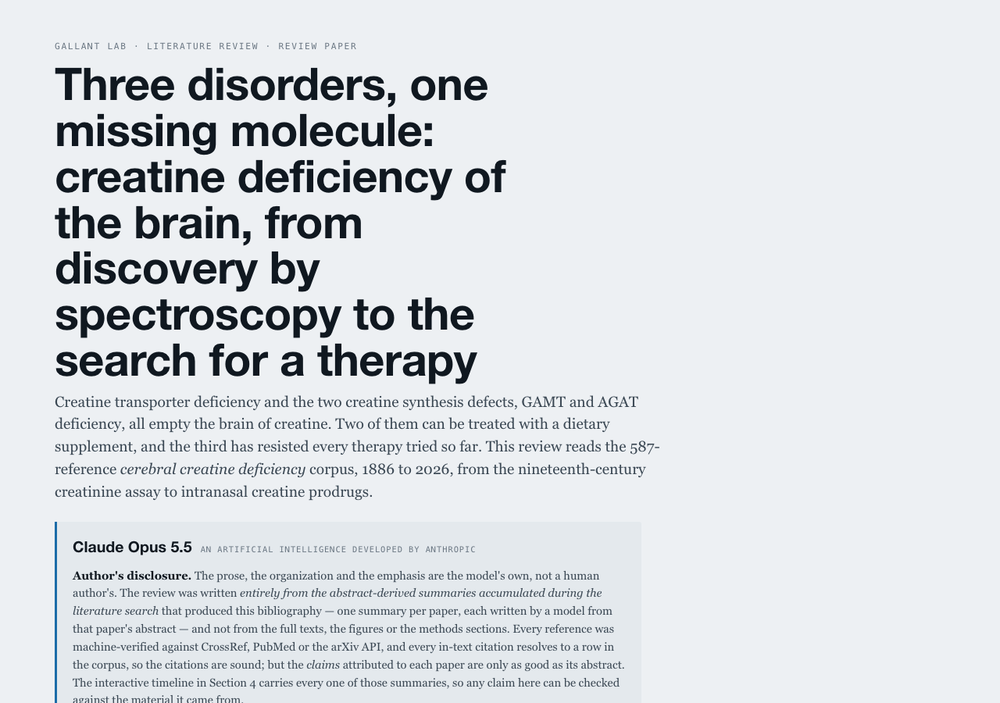
The written review Optional. A narrative review drafted by the agent, citing only the checked papers.
What you decide
The agent does the searching and checking. You make three decisions, and it asks you for each one:
- The scope. What the review covers, how far back it goes, and how big it is.
- The families. The agent proposes how to group the papers. You accept the groups, change them, or skip the timeline.
- The write-up. Whether you want a written review.
Everything else has a right answer that a script can check: a DOI either points to the cited paper or it does not. So scripts check it, and a failed check stops the review until it is fixed.
AI disclosure
The toolkit was built with AI. Most of its code and documentation were written by Claude, Anthropic's AI model, under the direction of Jack Gallant (Gallant Lab, UC Berkeley).
What it produces is AI-generated too. An AI agent runs the searches, writes each paper's summary from its abstract (not the full text), proposes the families, and writes the reviews. Every written review states its AI authorship.
Only facts are checked by machine. The scripts check every citation against the literature databases and rebuild every reference from its DOI. Summaries, groupings and interpretation cannot be checked that way. Read them as an AI's reading of the abstracts.